What is white hat link building in 2027?
White hat link building means getting links that a real editor or site owner would give you anyway, because your page, tool, data or business is worth linking to. Black hat link building means creating links mainly to push rankings: buying them, swapping them at scale, or producing them with automated tools.
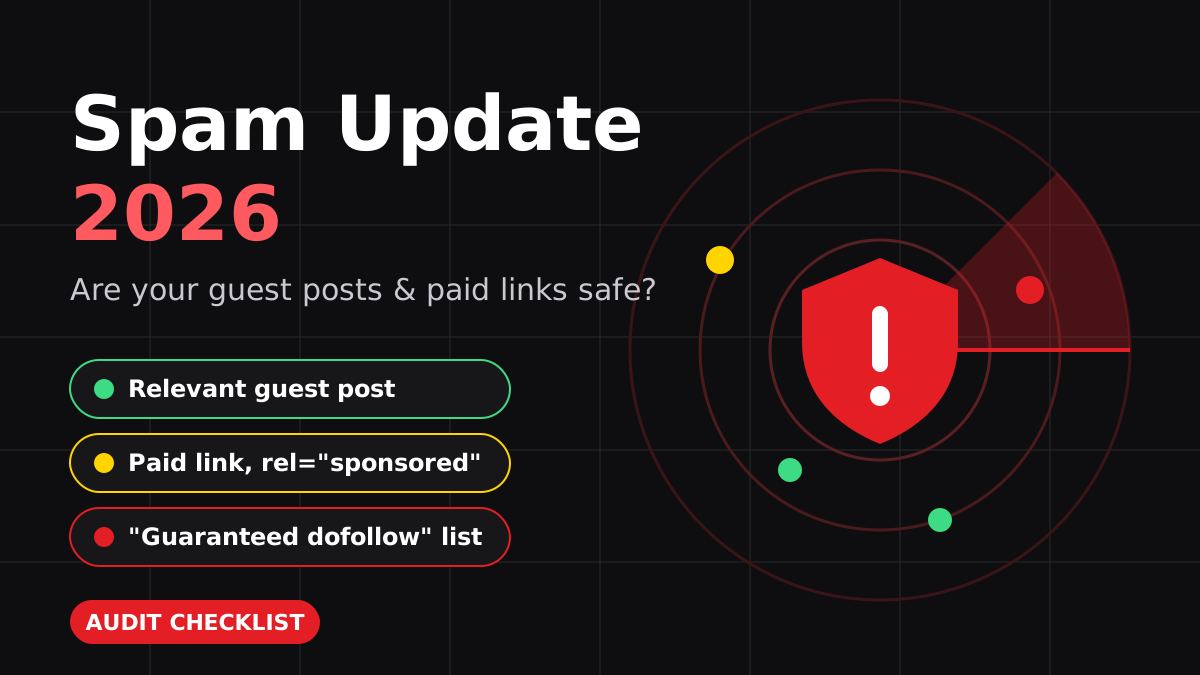
The line is not a matter of opinion. Google publishes it in its spam policies. The link spam section lists, among other things: buying or selling links that pass ranking credit, excessive link exchanges, using automated programs or services to create links, keyword-rich links hidden in widgets or spread through site footers and templates, and low-quality directory, bookmark and forum comment links. Google has also said its spam policies apply to AI Overviews and AI Mode, so links that break the rules do not help you in AI answers either.
A simple test from Google's own thinking: would you build this link if search engines did not exist? If the only reason for the link is ranking, it is probably a scheme.
Do the classic link building formulas still work?
Every few years a new name appears for an old idea. Here is how the best-known formulas hold up against Google's published rules in 2027.
| Formula | How it works | Google policy it touches | Verdict 2027 |
|---|---|---|---|
| ABC (3-way) link exchange | Site A links to C, and C's owner links back to A from another site B, so no direct swap is visible | Excessive link exchanges | Risky at scale. Fine only as a real partnership between relevant sites, never as a trade |
| Link pyramid (tiered links) | Tier 1 links to you, tier 2 web 2.0 posts link to tier 1, tier 3 spam comments and profiles link to tier 2 | Automated link creation, low-quality links | Spam tiers pass nothing and add risk. Only a clean version works (see below) |
| Link wheel | Several web 2.0 blogs link to each other in a circle and all link to you | Link schemes, scaled content abuse | Dead. The pattern is a footprint |
| Cloud stacking | HTML pages on cloud storage buckets, linked to each other and to you | Scaled content abuse, link schemes | Thin pages that rarely rank or last. Not worth the time |
| Google stacking | Docs, Sheets, Slides, Drive and Sites all interlinked | Depends on use | Mostly ineffective. Published Docs send a noindex header (we checked), so only real Sites pages and blogs can count |
| PBN (private blog network) | Expired domains rebuilt as blogs that link to your money site | Link schemes | High risk. One manual action can remove the rankings it built |
| Parasite posts | Paid articles on big sites that rank only because of the host's authority | Site reputation abuse | Being cleaned up. Google demotes these pages or the host |
| Web 2.0 blasts | Dozens of spun posts on free blog platforms in one day | Scaled content abuse, automated links | Dead as a blast. One unique, useful post per platform is fine |
Why do these link formulas fail now?
- Patterns are easy to spot. Circles of sites, the same anchor everywhere, new domains with no readers, and sudden spikes are exactly what spam systems are trained on.
- Unindexed pages pass nothing. Tier 2 and tier 3 pages are usually thin, so Google often never indexes them. A link on a page that is not in Google cannot pass value, however many tiers you stack.
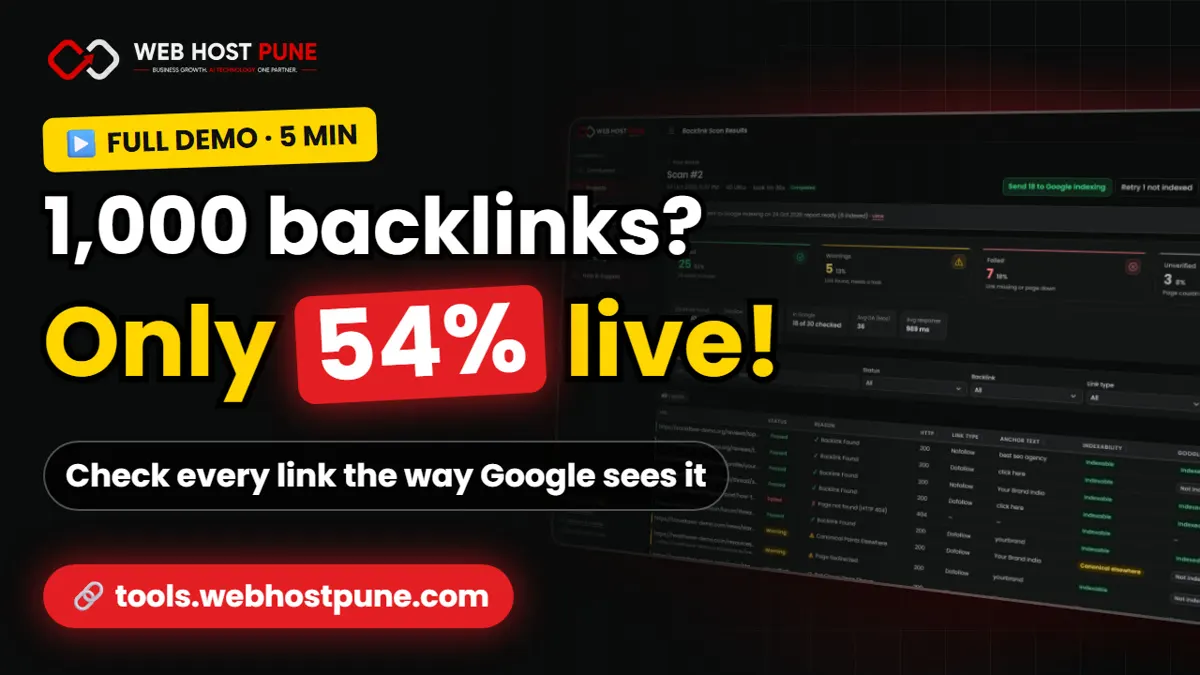
- Links disappear. Cheap pages get deleted and free accounts get suspended. When we rechecked 650 of our own backlinks, only 54% were still live, and that was without any spam tiers.
- Google mostly ignores spam links. In many cases you are not penalized, you are simply not credited. So the money and time spent produce nothing at all.
What is the white hat link building formula?
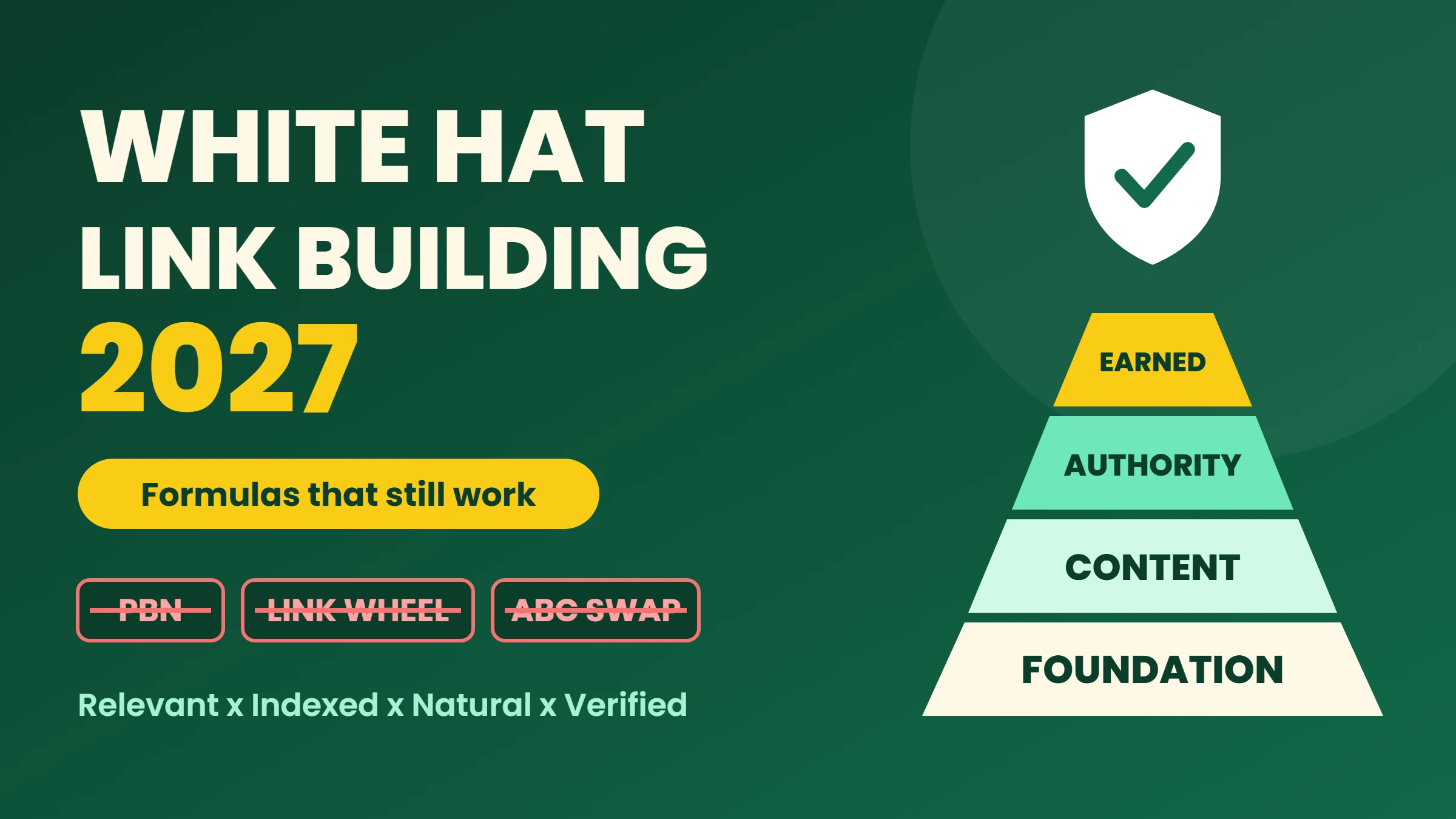
Replace the old formulas with one rule: Link value = Relevant x Indexed x Natural x Verified. It is a multiplication on purpose. A link on an irrelevant site, on a page Google has not indexed, with a forced anchor, or one you never checked is worth zero, however strong the site looks.
Then build your links as a pyramid of four layers, from the wide base to the narrow top. Unlike the spam pyramid, every layer here points at your own website, and every layer is something a real business would do anyway.
| Layer | Share of links | What it includes | Anchor style |
|---|---|---|---|
| 1. Foundation | 30 to 40% | Business profiles, local citations, industry directories, social profiles | Brand name and bare URL |
| 2. Content | 15 to 20% | Unique articles on indexable blog platforms and your own channels | Brand, URL, natural phrases |
| 3. Authority | 20 to 30% | Relevant guest posts, niche edits, partner and client credits, associations | Mixed, mostly natural |
| 4. Earned | 10 to 20% | Free tools, original data, local guides, expert quotes for journalists | Whatever the linker chooses |
Layer 1: How do I build a foundation of trusted profiles?
Foundation links tell search engines and AI tools who you are. They rarely move rankings alone, but every other layer works better on top of them.
- Complete your Google Business Profile first (see our local SEO and Google Business Profile checklist).
- List your business on the main local and industry directories in your country and city, one by one, by hand.
- Create real social and professional profiles (video, professional network, code hosting if you build software) and link each one to your website.
- Use exactly the same business name, address, phone and email everywhere. Inconsistent details confuse both maps and AI answers.
- Skip mass directory submissions. Low-quality directories are named in Google's link spam policy.
Layer 2: Can web 2.0 and blog platforms still help?
Yes, if you treat each platform as a real channel, not a link farm. One genuinely useful article per platform, with its own angle, examples and images, can bring readers, brand mentions and a crawlable link. Twenty spun copies on the same day cannot.
Check the platform before you write. Some popular document and presentation sharing services send a noindex, nofollow header on every public page, so links there never count. Open the page, look for a robots noindex tag or an X-Robots-Tag header, and confirm the links are normal HTML links, not script or redirect links. Our guide on why backlinks are not indexed lists every check.
- Different angle per platform: a how-to on one, a case study on another, a checklist on a third.
- Add information only you have: your own numbers, local examples, screenshots and lessons.
- Link where it helps the reader, usually once or twice, with a brand or natural anchor.
- Space them out: two to four posts a month is plenty.
Layer 4: What are earned links and how do I create them?
Earned links are the strongest and safest, because nobody asked for them. You publish something people want to reference, and they link on their own.
- Free tools: a checker, calculator or template that solves one problem well gets linked from guides and forums for years.
- Original data: "we rechecked 650 backlinks and 54% were live" is quotable. Writers link to sources for numbers.
- Local guides: genuinely useful city or industry guides attract links from local news and blogs.
- Expert quotes: answer journalist requests on expert-source platforms with a short, specific quote.
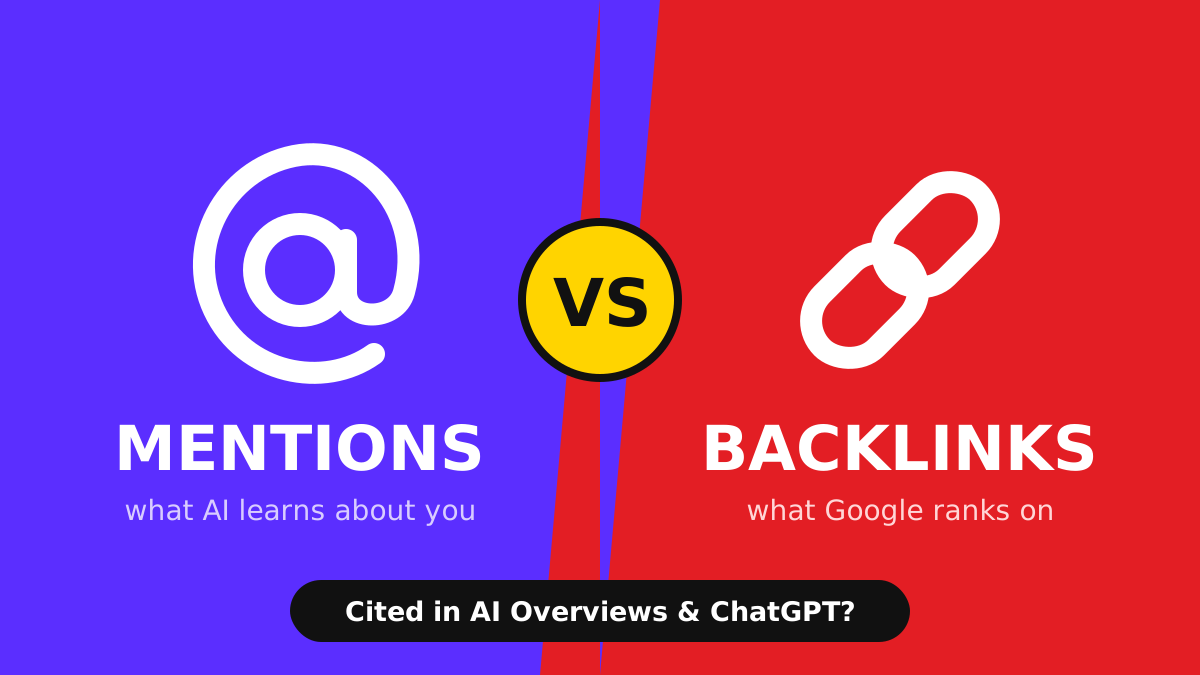
- Brand mentions: AI tools also learn from mentions without links. See brand mentions vs backlinks for AI search.
What anchor text ratio and link speed look natural?
There is no official ratio, so treat these as safe starting ranges based on what natural link profiles look like. The rule behind them is simple: let most people link with your name or address, as they would in real life.
| Signal | Safe range | Warning sign |
|---|---|---|
| Brand anchors | 40 to 50% | Under 20% |
| Bare URL anchors | 20 to 25% | None at all |
| Generic anchors ("this guide", "here") | About 15% | None at all |
| Partial keyword anchors | 10 to 15% | Over 30% |
| Exact match money keyword | Under 5% | The most common anchor |
| Pages linked | Home 30%, service pages 40%, blog 30% | Every link to one money page |
| Link speed | Steady, month after month | Hundreds in one week, then nothing |
| Link types | A natural mix including nofollow and ugc | 100% dofollow |
Is there a safe version of tiered link building?
Yes. Instead of pointing spam at your links, give your best real links a little help so search engines find them: share a new guest post on your social channels and newsletter, link to it from your own related blog post, and make sure the page is crawlable and in Google. Our guide on getting backlinks indexed covers what works.
This is the opposite of a spam tier. You are promoting a page that deserves readers, not manufacturing links to fake its authority.
How do I verify that my links count?
Every layer only works if the links are still there. Once a month, check each linking page: is it live, is your link present and pointing to the right page, is the link type what you expect, and can Google index the page? Doing this by hand works for ten links. For more, our free backlink checker opens every page live and gives each link a clear verdict with the reason.
A monthly white hat link building plan for small businesses
Around 20 to 25 quality links a month is a realistic, safe pace for most local and small businesses. Adjust the numbers to your time, but keep the mix.
Building links for clients? Agree the 4-layer mix, the anchor ranges and a monthly verified report up front. Our smart link building workflow shows how to turn the checks into proof.
- Week 1, Foundation: 6 to 8 profiles or citations until the important ones are done, all with identical business details.
- Week 2, Content: 3 to 4 unique articles on indexable platforms, each with its own angle and your own data.
- Week 3, Authority: 4 to 6 outreach wins: relevant guest posts, partner credits, broken link replacements.
- Week 4, Earned: publish or update one linkable asset (tool, data post, local guide) and answer journalist requests.
- Month end, Verify: check every new and old link, ask for fixes on missing ones and help new pages get indexed.
FAQ
Conclusion
The link formulas of the past tried to fake authority, and in 2027 they mostly produce nothing or cause damage. The white hat formula is slower but it compounds: build a clean foundation, publish unique content, earn authority links from relevant sites, create something worth citing, and verify every link every month. Links built this way keep working after every update.