In depth: E-commerce Website Development Company in Pune
A product catalog is not an online store
It's easy to underestimate how much has to actually work behind a "Buy Now" button. A page showing products with prices is the visible 10% of an e-commerce build. The rest — the part that decides whether a sale actually completes — is cart logic, inventory tracking, payment gateway handling, order confirmation, and what happens when something goes wrong mid-transaction. A store that looks finished but hasn't had real attention paid to that layer tends to reveal it the first time a real customer tries to buy something at an inconvenient moment: an out-of-stock item still shown as available, a payment that fails silently, an order confirmation that never arrives.
E-commerce development is the technical build behind those moving parts — distinct from, but tightly connected to, e-commerce website design, which shapes how the store looks and how the buying journey is laid out. Design decides where the "Add to Cart" button sits and what a product page shows; development decides whether clicking it actually, reliably works.
What a genuinely complete build covers
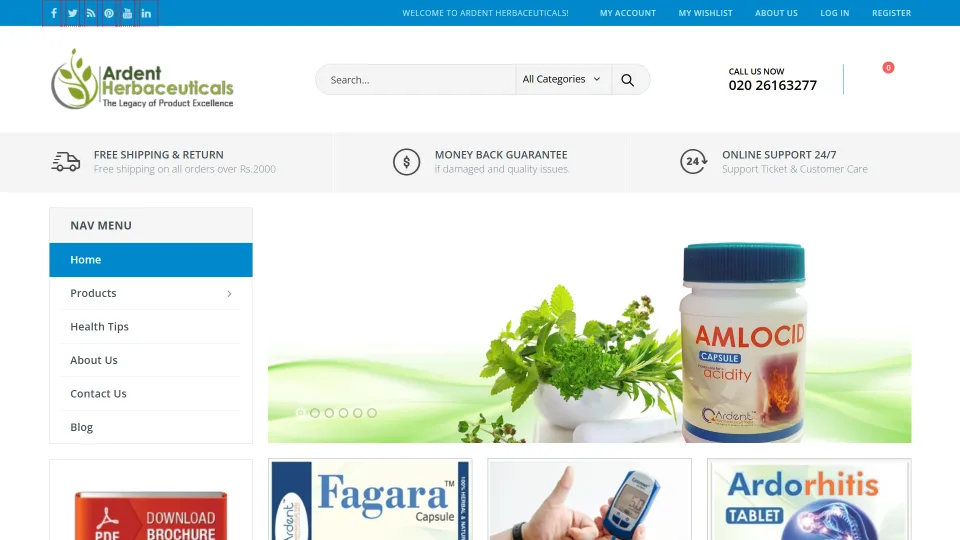
Our clearest example of a full build is a store we developed with a complete cart-to-checkout feature set: cart, wishlist, customer accounts, order tracking, and multiple payment gateway integrations, all working together rather than one being bolted on later. That's the bar we build toward on every e-commerce project, scaled to what the specific business actually needs:
A store that handles the "happy path" checkout perfectly but breaks on an out-of-stock item or a failed payment isn't finished — it's untested.
- Cart & checkout logic that handles real-world edge cases — quantity limits, out-of-stock items, discount codes — not just the happy path
- Payment gateway integration covering the methods Indian customers actually expect: UPI, cards, and cash-on-delivery where relevant
- Order tracking and customer accounts, so buyers can see order status without emailing to ask
- Inventory accuracy, so a product shown as available is actually available
On the platform question: WordPress with WooCommerce covers most stores well and is our default recommendation, since it's mature, well-supported, and doesn't need custom infrastructure to handle standard e-commerce needs. We move to a more custom PHP approach when a store's checkout logic, product configuration, or integration needs go beyond what WooCommerce handles cleanly — and we'll say so plainly if that's your situation, rather than forcing a generic platform to do something it wasn't built for.