What happened with Google spam updates in 2026?
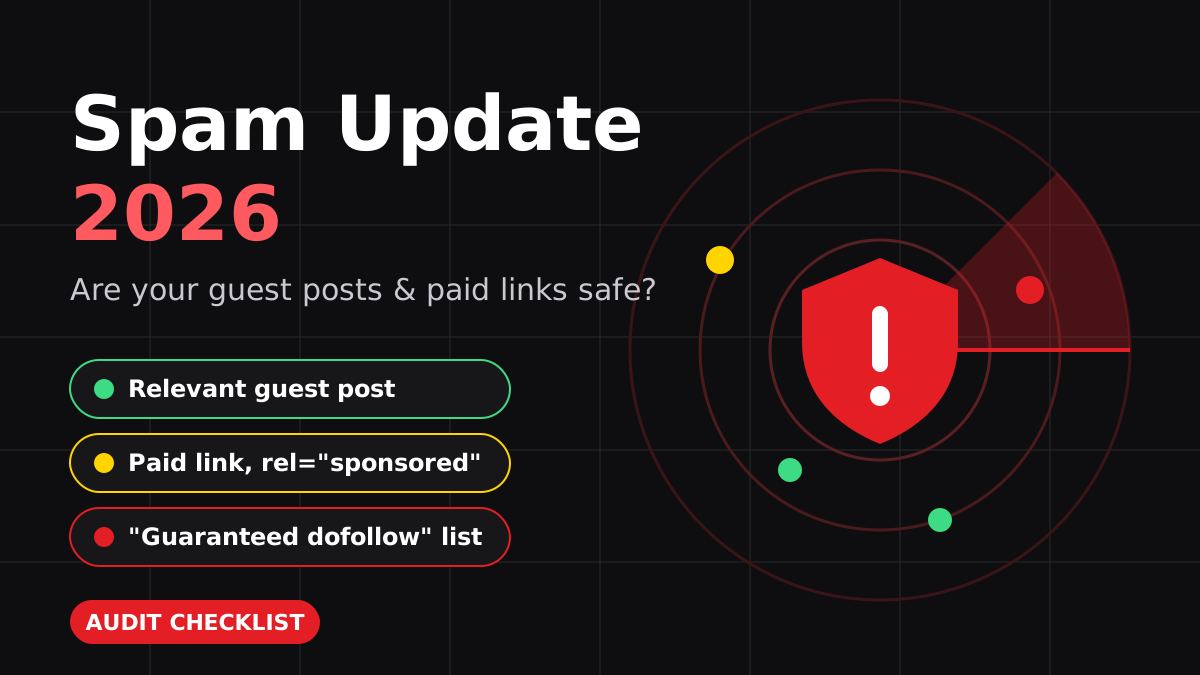
Google has run several spam updates this year; industry trackers reported rollouts in March, June, August and September 2026. Google confirmed the rollouts on its Search Status Dashboard but did not describe them as link spam updates, and it rarely lists exact targets.
That matters less than it sounds. Google's spam systems run all the time, and its spam policies are the rulebook regardless of which update is rolling out. If a link pattern breaks the link spam policy, it is at risk every day, not only during an announced update.
Do not plan your link building around update dates. Plan it around the policy: links that exist mainly to manipulate rankings are the risk.
Are guest posts still safe for SEO?
A genuine guest post, written for the readers of a relevant site that has real editorial standards, is normal marketing and has worked for decades. Google's policy targets large-scale guest posting campaigns with keyword-rich anchor links, where the article exists only to carry a link.
| Lower risk guest post | Higher risk guest post |
|---|---|
| Site covers your topic and has real readers | Site publishes any topic: casino, crypto, health, your niche |
| Editor reviews and edits the article | "Write for us" page with a price list and no review |
| Brand or natural anchor, one link | Exact-match keyword anchors, several links |
| Link marked sponsored if you paid | Paid, but sold as "guaranteed dofollow" |
| Page is indexed and gets traffic | Page is noindex, or the site is barely indexed |
What does Google say about paid links?
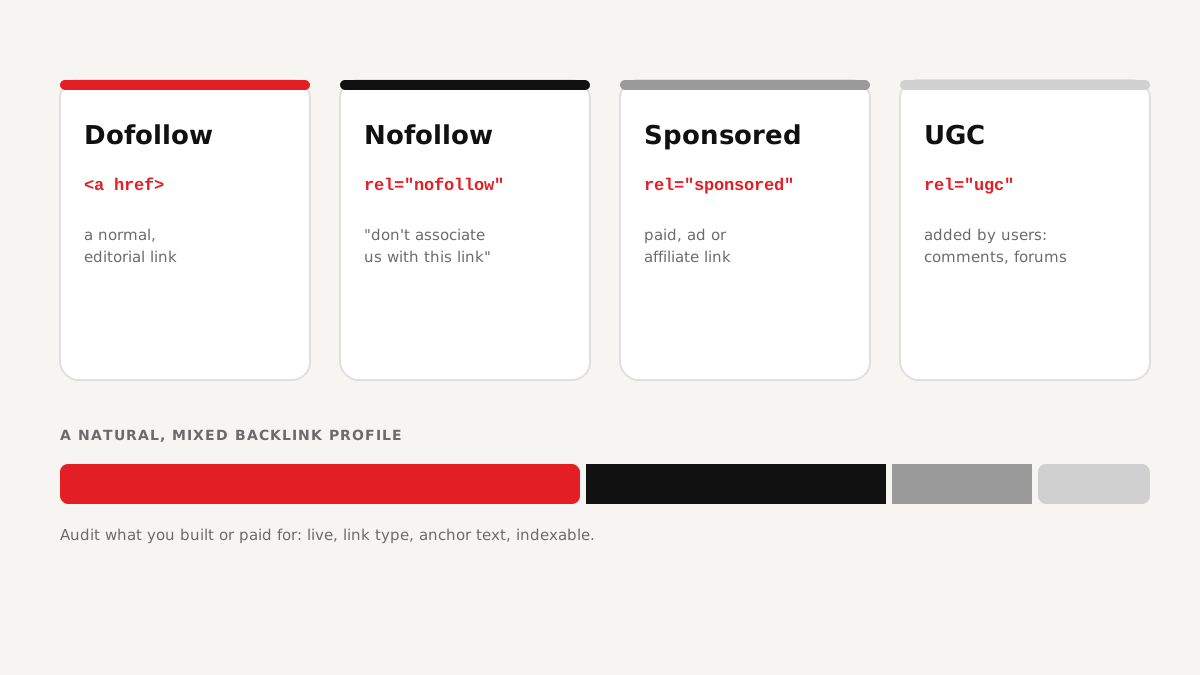
Google asks that links which are paid for are qualified with rel="sponsored" or rel="nofollow". Buying or selling followed links to pass ranking value is listed as link spam. Sites that sell links can lose their ability to pass value, and in serious cases receive a manual action.
That does not make every paid placement wrong. Sponsored articles on relevant sites still bring visitors and brand exposure. The difference is honesty about what the link is: a sponsored link labelled as sponsored is fine; a paid link disguised as editorial is the risk. Our guide to dofollow, nofollow, sponsored and ugc explains each label.
What is site reputation abuse (parasite SEO)?
Site reputation abuse is when third-party pages are published on an established site mainly to borrow its ranking strength, for example a coupon or casino section on a news website with no real involvement from the host. Google enforces this policy separately and has removed many such sections from search results.
For link building, the lesson is simple: a link from a section that does not belong on its host site is not a strong, safe link, even if the domain looks impressive.
Backlink audit checklist after a spam update
Run this on every link you built or paid for in the last 12 months:
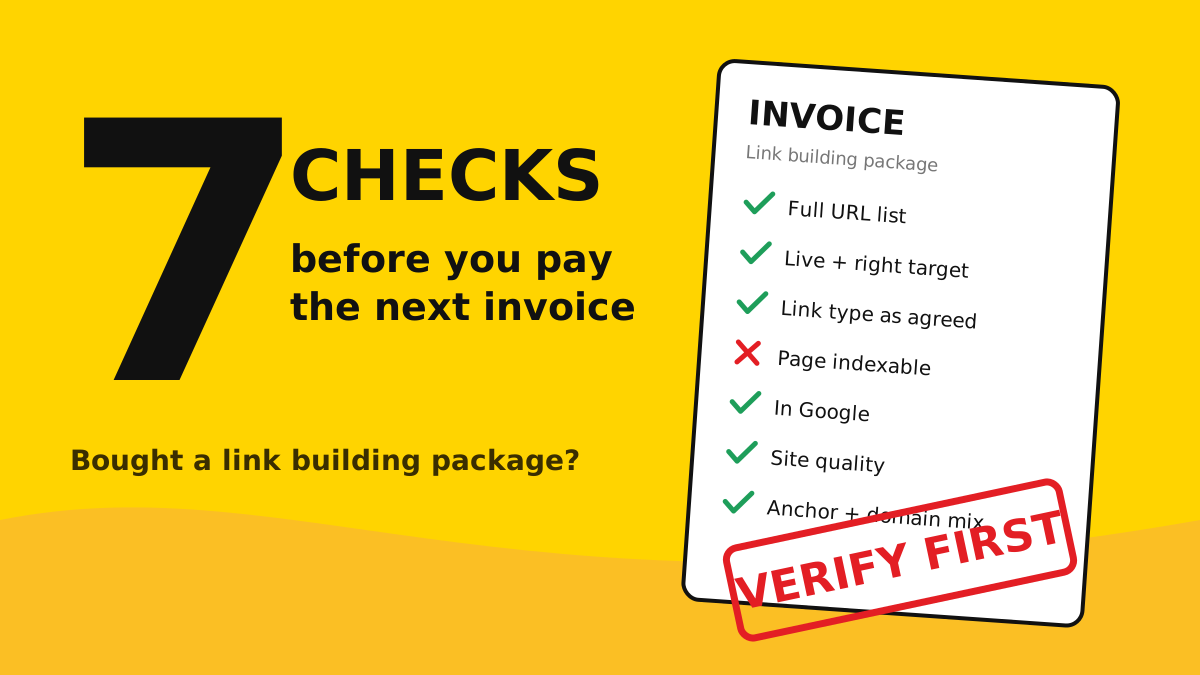
- Collect every linking page from reports, invoices and your Search Console links report into one list.
- Check each link is live, its link type, anchor text and exact target URL.
- Check the page is indexable and in Google. A site that is barely indexed is a warning sign in itself.
- Look at the anchors as a whole. If most of your links use the same money keyword, that pattern looks manufactured.
- Look at the sites. Off-topic "publish anything" sites, high spam scores and pages stuffed with outbound links are the risky ones.
- Fix what you can: ask for anchor changes or sponsored labels, remove links you control, and stop buying from sources that fail repeatedly.
- Keep a dated report so you can compare after the next update.
Should I use the disavow tool?
Most websites never need it. Google says it ignores most spammy links on its own. Disavow is meant for cases where you have a lot of unnatural links that you or someone working for you built, and especially if you received a manual action for them. Disavowing good links by mistake can hurt, so audit first and disavow only with a clear reason.
How to build links that survive every update
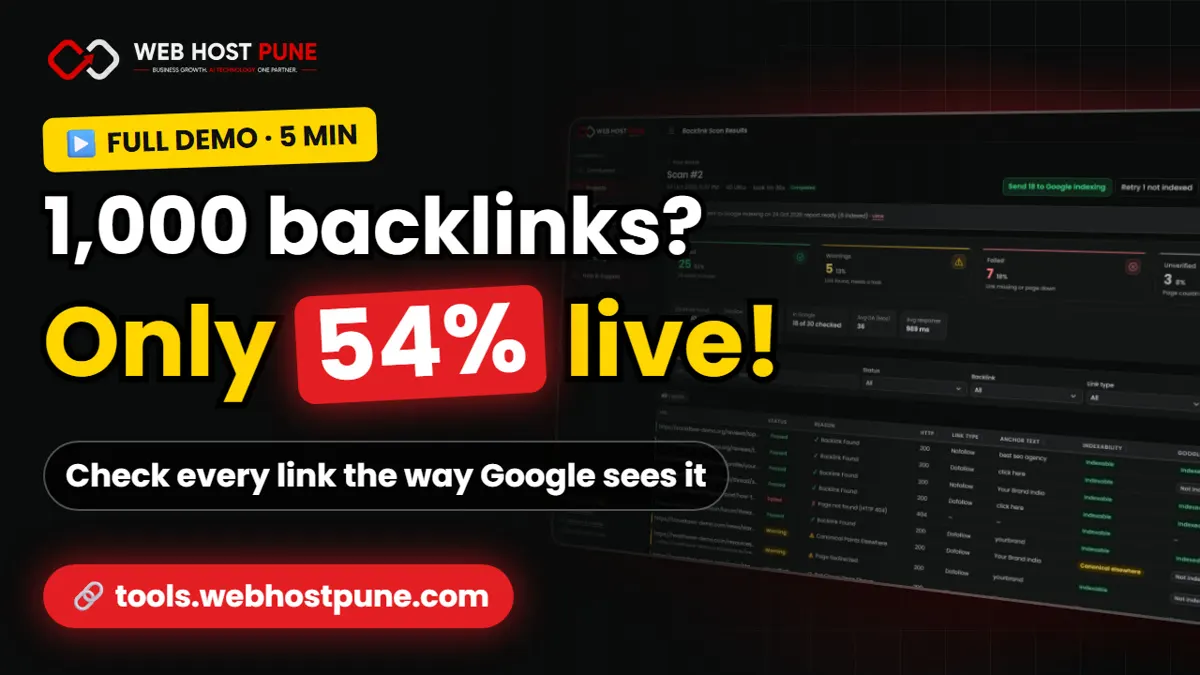
Build fewer, better links: relevant sites, real editorial review, natural anchors, honest labels. Then verify them instead of trusting a report, and re-check them over time. Our smart link building workflow shows the full routine, and if you pay an agency, use the 7 checks before you pay for a link building package. To audit many links quickly, use our backlink checker.
FAQ
Conclusion
Spam updates come and go; the policy stays the same. Guest posts and sponsored placements are not the problem, deception and scale are. Audit what you have, keep a dated baseline, and build links you would be happy to show Google and your clients.