Why "it's been a few years" isn't the right test
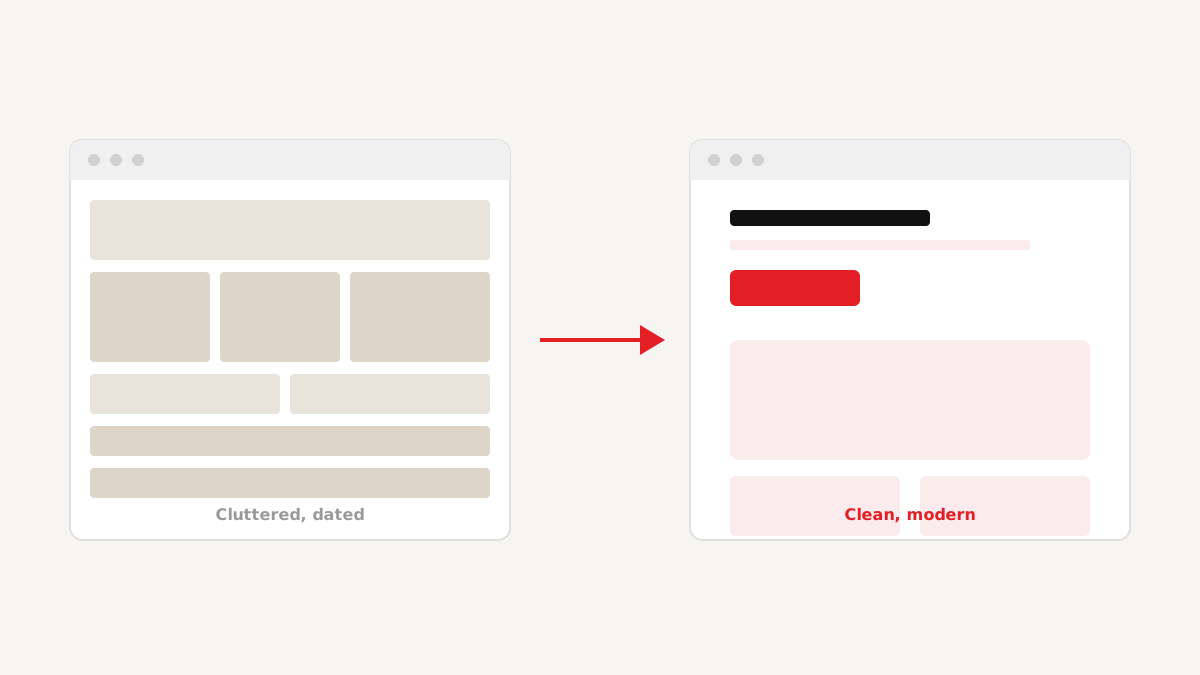
A lot of businesses assume a website needs redesigning on some kind of schedule — every 2-3 years, whether it needs it or not. That's the wrong test. A well-built site can still perform fine after several years; a poorly-built site can feel outdated within months. The real question isn't how old your site is, it's whether it's actively working against your business right now.
1. It doesn't work properly on mobile
If your site requires pinching and zooming, has buttons too small to tap accurately, or breaks visually on a phone screen, this alone is reason enough for a redesign — the majority of traffic to most business sites now comes from mobile devices, and a site that fails there is failing most of its visitors.
2. It's slow to load
A slow site loses visitors before they even see your content — most people won't wait more than a few seconds. If your site consistently feels sluggish, that's often a sign of an aging platform, unoptimized images, or accumulated plugin bloat that a refresh can't fully fix.
3. You're afraid to update it
If making a change to your site feels risky — worried it might break something, or you need to call a developer for even minor text edits — that's a real operational problem, not just an inconvenience. A site should be something your team can maintain confidently.
4. It doesn't reflect what your business actually does now
Businesses evolve — new services, a shift in focus, a different customer base — and a site built for an earlier version of your business can actively confuse visitors about what you actually offer today.
5. Your competitors' sites look meaningfully more credible
This one is subjective but real: if a visitor comparing you to a competitor comes away with the impression that the competitor is more established or trustworthy purely based on the website, that perception gap is costing you business regardless of how good your actual work is.
6. It has no clear path to contact or convert
If a visitor has to hunt for your phone number, or there's no clear next step after they've read your services page, the site isn't doing its actual job — however good it looks.
7. It's built on something no longer safely maintainable
An outdated platform version, unsupported plugins, or a builder tool that's been discontinued means every day the site stays live, it's accumulating security and stability risk — this is a genuine rebuild trigger, not a cosmetic one.
Key takeaway: one or two of these signs might mean a targeted refresh. Several at once usually means the underlying foundation needs to be rebuilt, not patched.
FAQ
Conclusion
The honest test isn't your site's age, it's whether it's actively costing you customers, credibility, or peace of mind today. If several of these signs sound familiar, it's worth a real conversation about whether a redesign — not just a refresh — is the right next step.