Shared, VPS, or Reseller Hosting — Which Does Your Business Actually Need?
Ajit Sahane
··7 min read
Quick answer
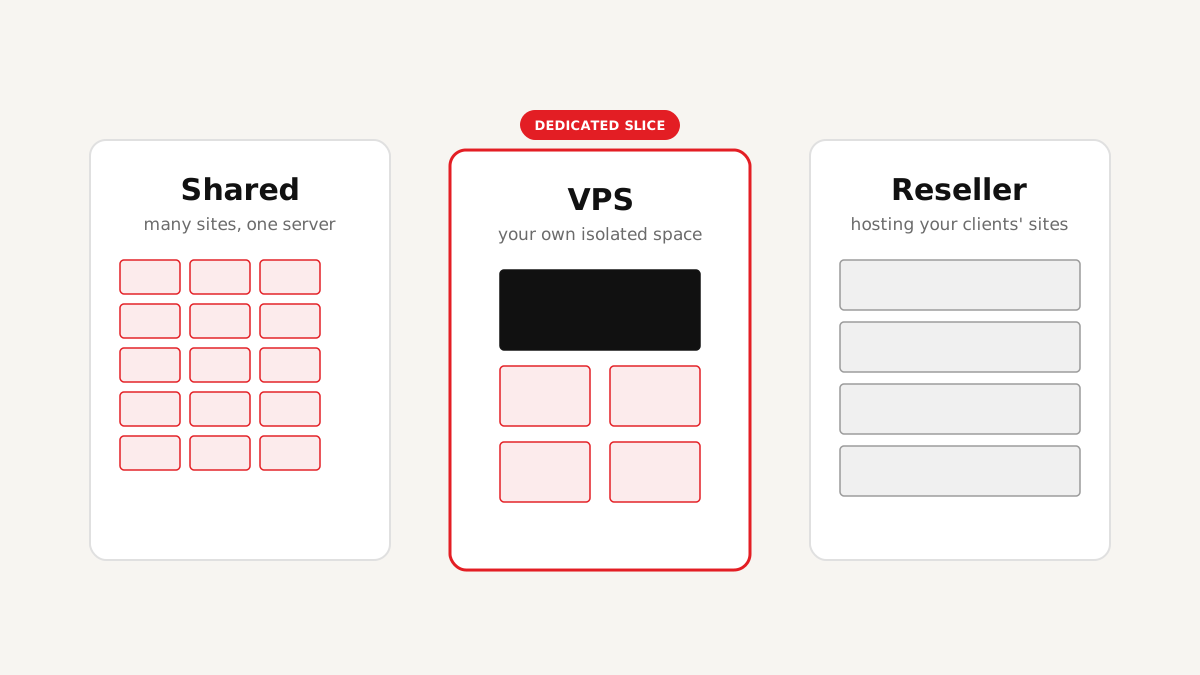
Shared hosting is right for most business websites — it splits a server's resources across many sites and is affordable because the cost is shared.
VPS hosting gives your site a dedicated, isolated slice of a server — move here only once you have a specific, evidenced reason, not just because it sounds safer.
Reseller hosting solves a completely different problem: hosting multiple separate client sites under one account. It is not "more power for my one website."
The right choice depends on how a server's resources actually get divided up between you and everyone else using it — not on which plan name sounds most impressive.
Why this question is more confusing than it needs to be
If you've gone looking for hosting for even ten minutes, you've run into three words that all sound like they mean roughly the same thing: shared, VPS, reseller. Most hosting providers aren't in a hurry to explain the difference clearly, because the more confused you are, the easier it is to upsell you to whichever plan has the best margin — not the one that actually fits your site.
The real difference isn't about "how good" each option is. It's about how a physical server's resources get divided up between you and everyone else using it. Once that clicks, the right choice for your specific situation is usually obvious.
Shared hosting: the right starting point for almost everyone
Shared hosting puts many websites on one server, splitting its resources — CPU, memory, bandwidth — across all of them. It's affordable specifically because the cost is shared. For a standard business website with typical traffic (a few hundred to a few thousand visits a month, nothing unusual happening), shared hosting is genuinely enough. Most sites never come close to needing more.
The catch is exactly what you'd expect: if another site on the same server has a traffic spike or a badly-written plugin eating resources, it can occasionally affect performance for everyone sharing that server. In practice, with decent server management, this is rare — but it's the honest tradeoff you're making for the lower price. See our Linux Shared Hosting or Windows Shared Hosting pages for what's actually included.
VPS hosting: for when you've actually outgrown shared
VPS (Virtual Private Server) hosting gives your site a dedicated slice of a server's resources, walled off from other sites on the same physical machine. You're not splitting capacity with strangers anymore, so performance is more predictable — but you're paying for that predictability.
The honest signal that you need VPS isn't "my site feels slow sometimes." It's a specific, measurable pattern: your site is consistently slow under normal (not spike) traffic on shared hosting, or you need a server configuration shared hosting simply can't offer — a specific software version, more control over server settings, that kind of thing. Details are on our VPS Hosting page.
Key takeaway: if you're not sure whether you need VPS, you probably don't yet. Shared hosting handles more than most business owners expect.
Reseller hosting: a completely different question
This is where the confusion usually peaks. Reseller hosting isn't "more power for my one website" — it's a way to host multiple separate client websites under one account, each one isolated from the others. It exists for web agencies and freelancers managing several clients' sites, letting them resell hosting capacity as part of their own service. See Linux Reseller Hosting or Windows Reseller Hosting.
If you're a single business asking "which plan makes my website faster," reseller hosting is almost never the answer — it solves a completely different problem (managing many sites for many clients), not the problem you actually have (one site needing to perform well).
Not sure which plan is right for you?
Tell us about your site and traffic, and we'll give you an honest recommendation — not the most expensive option by default.
Sub-divided across multiple hosted client accounts
Typical cost
Lowest
Higher than shared
Varies by capacity resold
Right for you if…
Standard traffic, no special config needed
Consistent slowness or a specific server requirement
You host websites for other people/clients
FAQ
If you're running a standard business website with typical traffic, shared hosting is usually enough. Consider VPS if your site is consistently slow under normal (not spike) traffic, or you need a specific server configuration shared hosting can't provide.
No — reseller hosting is built for hosting multiple separate client websites under one account, not for boosting the performance of one site. If that's your only site, shared or VPS hosting is the right question to be asking.
Moving between shared and VPS hosting is a standard migration, not a rebuild — a reasonable host will help you move up (or down) as your actual needs become clear.
Neither is universally better — it depends on what your site or application needs to run. Most WordPress and PHP sites run well on Linux; some specific software stacks need Windows. See our Hosting page for the full comparison.
Conclusion
The honest one-paragraph version: shared hosting is right for the large majority of business websites. Move to VPS only once you have a specific, evidenced reason — not because a bigger number sounds safer. Reseller hosting isn't for hosting your own site at all; it's for agencies hosting other people's sites. If a provider is steering you toward the most expensive option without asking what your site actually needs, that's worth noticing.
Written by
Ajit Sahane
Founder, WebHostPune
12+ years building, hosting, and marketing websites for Pune-area businesses. See the About page for the full background.