Why this question comes up so often
It's one of the most common questions a first-time client asks, usually phrased something like "so is design the same thing as development?" In a lot of small agencies, the honest answer is: kind of, because one person does both, badly labeled as a single service. That doesn't mean the distinction isn't real — it means a lot of agencies aren't set up to treat it seriously.
What design actually decides
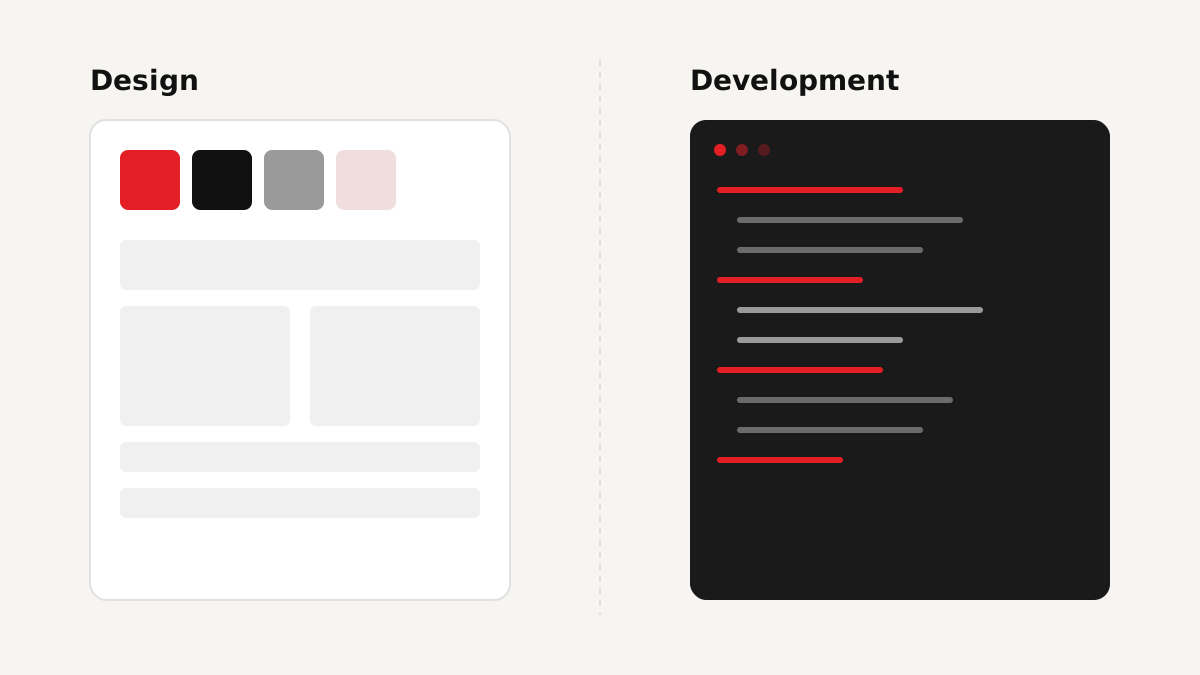
Layout, color, typography, imagery, the visual hierarchy that tells a visitor where to look first. Good design also covers structure — where information lives, how a visitor moves from "I have a question" to "I found the answer" or "I filled out the enquiry form." A well-designed site feels effortless to use, which is a lot harder to achieve than it sounds. See our Website Design page for how we approach that specifically.
What development actually decides
Development is the part of the process where a design becomes a real, functioning website — the code that renders the layout, handles form submissions, connects to a database if the site needs one, and keeps working reliably after launch, not just on the day it ships. A site can be beautifully designed and still be a development failure if the contact form silently fails, or the site can't handle a modest traffic spike, or a routine WordPress update breaks the homepage.
Key takeaway: a design problem is visible immediately. A development problem often isn't — until it costs you a customer.
Why the platform choice matters here too
This is also where the WordPress-vs-custom-PHP decision comes in. WordPress suits a content-driven business site you'll want to update yourself — a blog, a standard business site, a WooCommerce store. Custom PHP suits a site or application with specific functionality a generic platform can't model cleanly — custom booking logic, an integration with a system you already use, a purpose-built internal tool. Neither is universally "better." The honest answer depends on what your project actually needs to do, and a good development partner will tell you which situation you're in rather than defaulting to whichever platform is easier for them. See WordPress Development and Custom PHP Development for the fuller comparison.
A practical checklist for hiring someone
A few concrete things to check before you commit:
- Ask who's responsible for how the site will work, not just how it will look — forms, speed, security.
- Ask what happens if a plugin update breaks something after launch — is ongoing support included or separate?
- If a developer can't explain their design decisions in plain terms, treat that as a flag worth a follow-up question.
- Ask which platform they recommend and why — the answer should be about your project's needs, not their default toolset.
FAQ
Conclusion
The best outcome is one team — or one person — genuinely competent at both design and development, not a design-only shop that treats development as an afterthought, or a developer who treats design as decoration. Knowing the difference makes it much easier to ask the right questions before you hire anyone.