Separating two genuinely different questions
Web development has changed in the last couple of years, on two fronts worth distinguishing clearly: how a site actually gets built, and what a finished site can do once it's live. A lot of AI marketing content blurs these together — it's worth being precise about which one you're actually talking about.
How the build process has changed
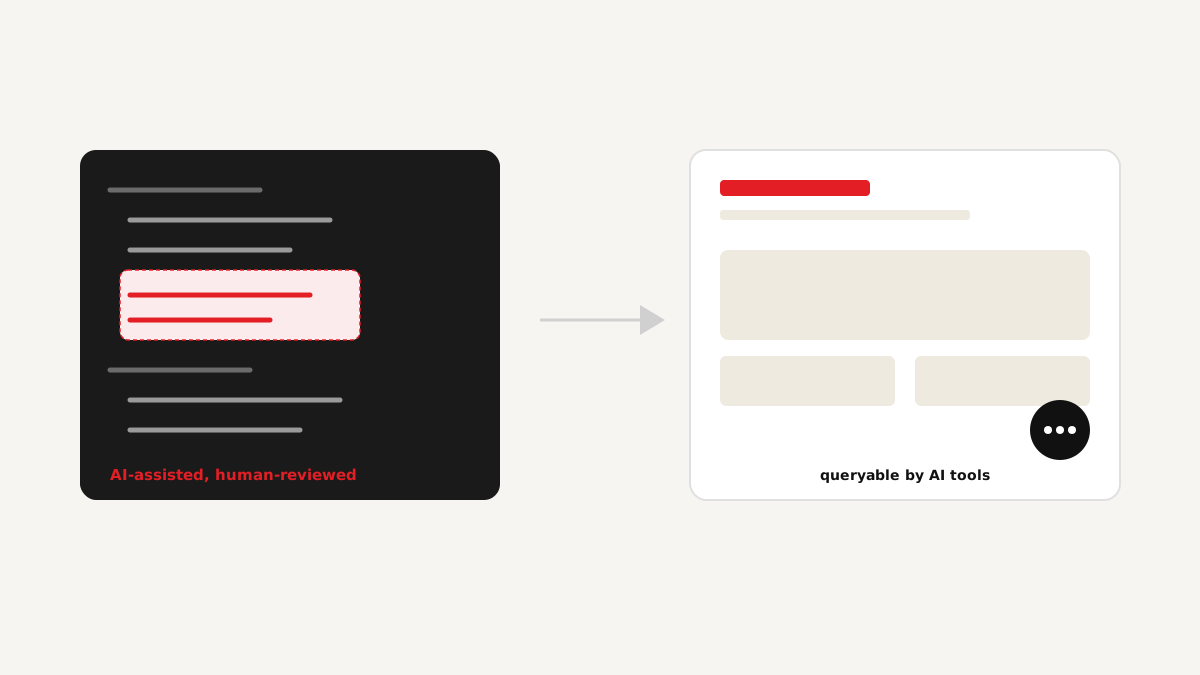
Modern AI-assisted coding tools genuinely speed up parts of development — boilerplate code, routine patterns, first-draft implementations of common functionality. Used well, this means more time can go toward the decisions that actually require judgment: structure, security, and whether the finished feature actually does what the business needs.
Key takeaway: AI writing code faster doesn't change whether that code is secure, well-structured, or correct — that's still entirely a human responsibility.
The shortcut that creates real problems
Treating AI-generated code as a finished product without review is exactly the shortcut that produces the messy, hard-to-maintain sites developers eventually get called in to fix. The speed AI provides is real and useful — but it's a first draft, not a final answer, and skipping the human review step is where quality problems actually come from.
How a finished website can now do more, too
On the finished-product side, a genuinely new capability has emerged: a website or application can be structured to expose its own data through MCP (Model Context Protocol), an open standard that lets AI tools securely query and act on a system's real data. For a business application with real data behind it — inventory, bookings, customer records — this means the system can eventually be queried and acted on by AI tools your business connects, not just browsed by a person clicking through pages.
This is a real architectural capability, worth building toward when it genuinely applies to your project — not a marketing checkbox added at the end for the sake of saying "AI-powered."
What this means practically for a business commissioning a website
A few honest things to look for in a development partner:
- They should be able to explain what AI tools they use in the build process and where human review still happens.
- They shouldn't treat "AI-powered" as a selling point on its own — ask what it specifically enables for your project.
- If MCP or AI-querying is relevant to your business (real, structured data behind the site), it's worth discussing upfront, not retrofitting later.
- Speed of delivery from AI tooling shouldn't come at the cost of the testing and review discipline that catches real problems before launch.
FAQ
Conclusion
AI has genuinely changed both how websites get built and what they can do once live — but the fundamentals haven't changed: real judgment, real testing, and real review still determine whether a website actually works well. Treat AI as a tool that speeds up the work, not a replacement for the discipline that makes the work good.