Why off-the-shelf software is the right default, not the wrong one
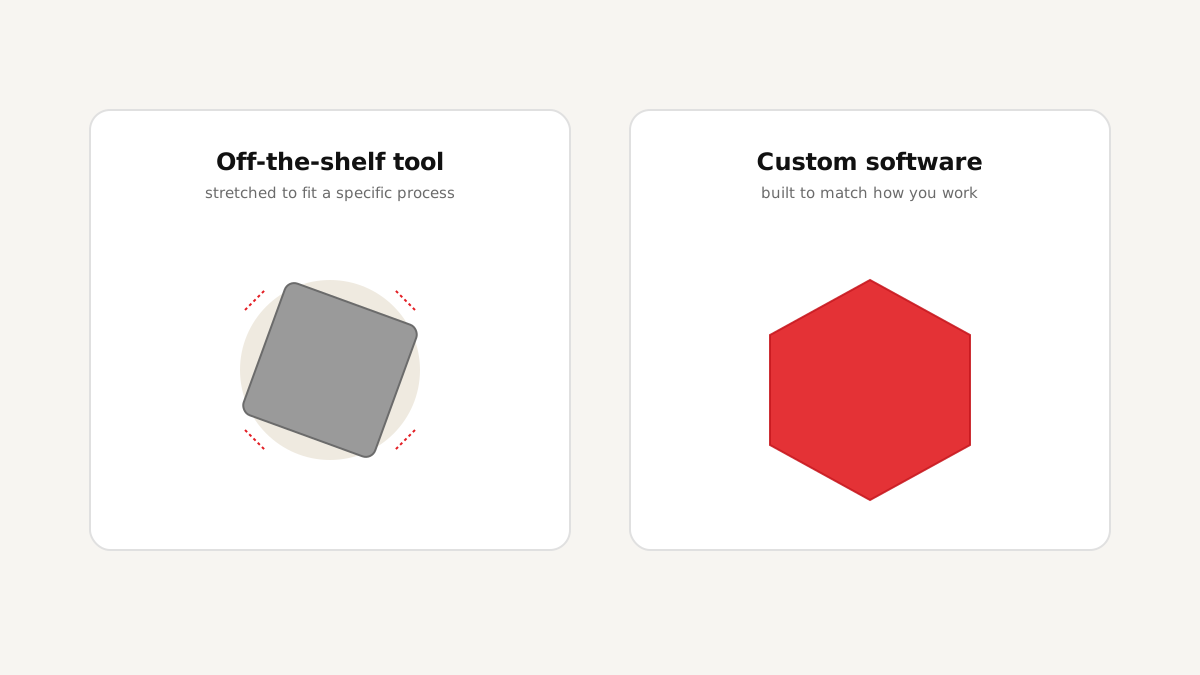
It's worth saying plainly: for most businesses, most of the time, a generic CRM, a standard accounting tool, or a well-configured spreadsheet works perfectly well. Custom software is a real investment of time and money, and it's not the right first move for a business whose needs a generic tool already covers.
The real signal you've outgrown a generic tool
The clearest sign isn't "I wish this tool had one more feature" — every tool has that. It's when your team is building real, ongoing workarounds to compensate for what the tool can't do: a parallel spreadsheet tracking something the CRM doesn't capture, manual re-entry of the same data into two different systems, or a process that only works because one person remembers all the exceptions the software doesn't handle.
Key takeaway: if your team has quietly built an entire manual process around a software tool's limitations, that workaround is the real cost — not a footnote.
Industries where this gap shows up most often
Dairy and distribution businesses often have a collection-and-distribution model — tracking vendor pickups, quantities, and payments across a route — that generic inventory software wasn't built to model. Real estate businesses frequently need property, lead, and sales-pipeline tracking combined in a way most generic CRMs handle awkwardly at best. Traders and brokers often need financial and business-management logic specific to how their transactions actually work, not a generic accounting template.
What to weigh before committing to a custom build
A few honest questions worth asking before committing to custom software:
- Is the workaround actually costing you time or money, or is it a minor annoyance you could live with?
- Would a different off-the-shelf tool solve it, before assuming custom is the only path — sometimes the fix is switching tools, not building one.
- Is your process itself stable, or still evolving? Custom software built around a process that's about to change significantly can be a wasted investment.
- What's the real cost of the status quo over the next 1-2 years, compared honestly against the cost of building something purpose-fit?
FAQ
Conclusion
Custom software is the right call when the gap between what a generic tool does and what your business actually needs has become a real, ongoing cost — not because custom is inherently better. If you're not sure which side of that line you're on, that's a conversation worth having honestly before committing budget either way.