Why these two terms get confused so often
CRM and ERP both get thrown around loosely in a lot of software marketing, sometimes almost interchangeably, which makes it genuinely hard to know which one your business actually needs. They're not competing options for the same problem — they manage different sides of a business entirely.
What CRM actually manages
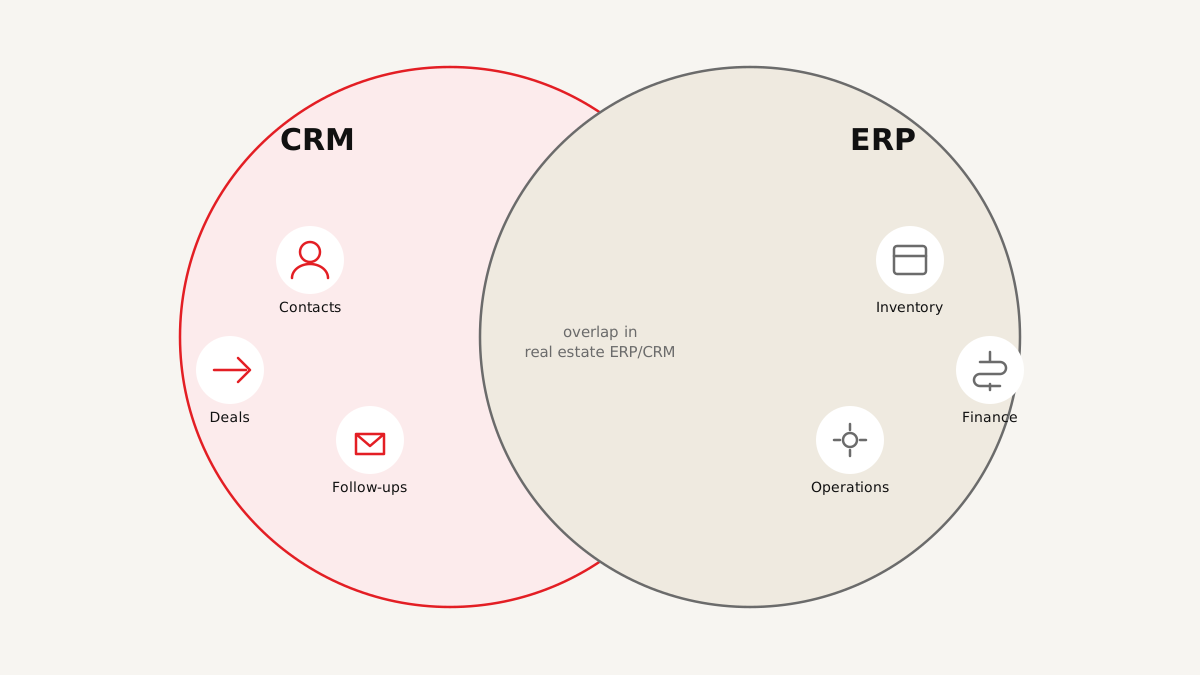
CRM stands for Customer Relationship Management — software focused on your relationships with customers and prospects. Contacts, deal/opportunity tracking, communication history, follow-up reminders, sales pipeline stages. The core question a CRM answers is: "where does each customer or lead stand, and what happens next?" See our Custom CRM Development page for what a purpose-built CRM looks like.
What ERP actually manages
ERP stands for Enterprise Resource Planning — software focused on your internal business operations. Inventory levels, financial tracking, resource and process planning, often across multiple departments. The core question an ERP answers is: "what resources do we have, where are they, and how are they being used?"
Where the two genuinely overlap
Some industries have a business model where customer relationships and operational resources are tightly connected — real estate is the clearest example. A property sale involves tracking the lead and communication history (CRM territory) alongside the actual property inventory, availability, and transaction details (ERP territory). This is why our Real Estate ERP/CRM offering is deliberately built to cover both in one system, rather than forcing a real estate business to stitch together two separate tools.
Key takeaway: if your business genuinely needs both customer-relationship tracking and operational resource management working together, a combined system usually beats maintaining two disconnected ones.
Which should you prioritize first?
For most small and mid-size businesses, the honest answer is: whichever one is closer to your actual daily pain point right now, not both at once by default. If leads are falling through the cracks and follow-ups are inconsistent, that's a CRM problem. If inventory, resource allocation, or operational tracking is where the real friction is, that's closer to ERP territory. Trying to solve both simultaneously with one big project often means neither gets built well.
FAQ
Conclusion
CRM and ERP solve different problems — customer relationships versus operational resources — and knowing which one is actually causing your business pain today is the right starting point, not adopting both because the acronyms sound related. For businesses where the two genuinely overlap, like real estate, a combined system built for that specific overlap is worth considering.